SSB
How to Fill the SSB PIQ Form, Section by Section
How to fill each part of the SSB PIQ form, with examples from my own: what to write about education, sports, hobbies and responsibilities, what to leave out, and why section 11 matters most.
DefenceRoger Editorial · 13 July 2026 · 4 min read
On this page
- Sections 1 to 5: basic details and where you have lived
- Section 6: family details
- Section 7: education and achievements
- Sections 8 and 9: physical details and family income
- Section 10: NCC
- Section 11(a): sports and games
- Section 11(b): hobbies and interests
- Section 11(c) and positions of responsibility
- Sections 12 to 14: previous attempts
The Personal Information Questionnaire (PIQ) looks complicated the first time you see it, but it's actually simple. The trouble is that a lot of students don't know what to write and what to leave out, and I have seen capable candidates hurt their chances with a careless PIQ. So here is how I would fill it, section by section.
Sections 1 to 5: basic details and where you have lived
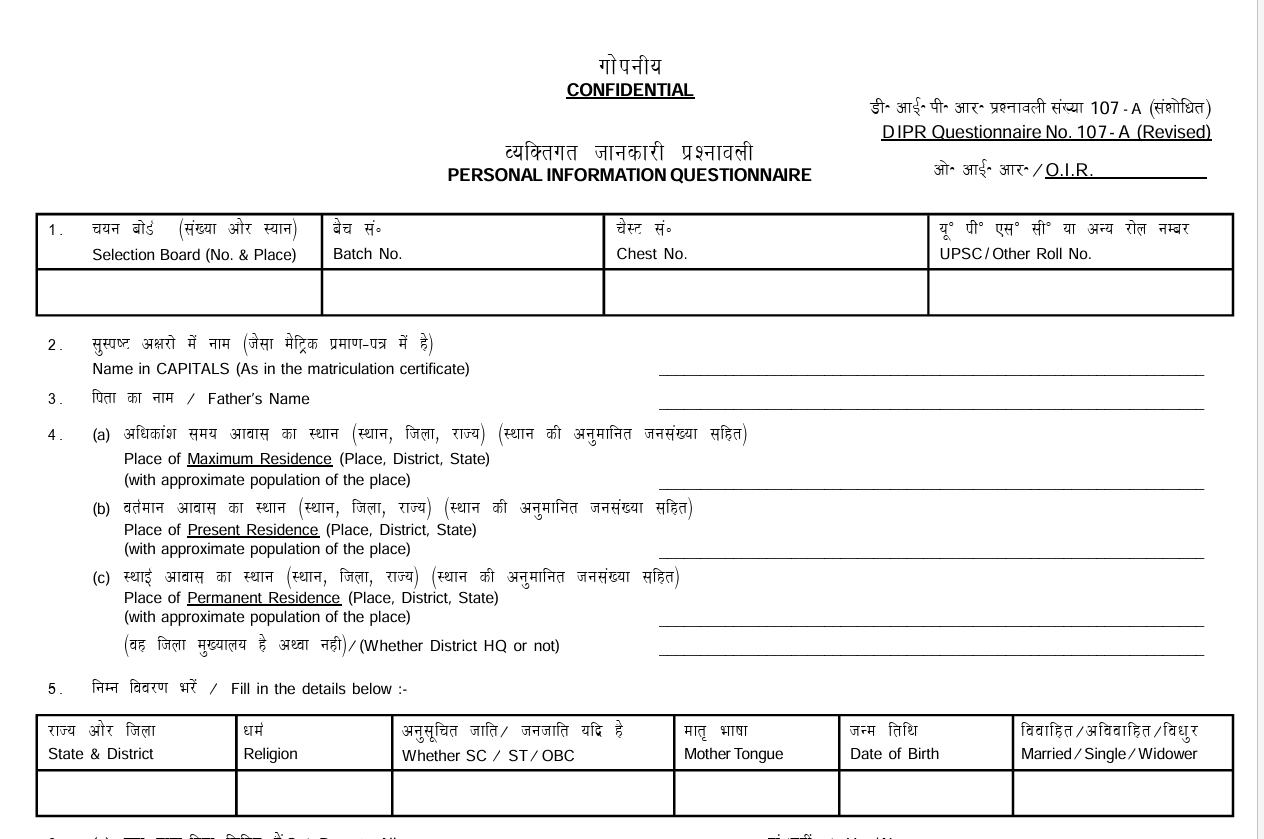
The form has about 14 sections. The first five are mostly simple:
- Section 1 has four fields. You only fill your UPSC roll number. The rest are filled at the selection centre.
- Section 2 is your name.
- Section 3 is your father's name.
- Section 4 is about places: your current residence, the place you have lived longest and your permanent address. Look up the population of each place and fill it in.
- Section 5 has five basic personal details. Nothing tricky.

Section 6: family details
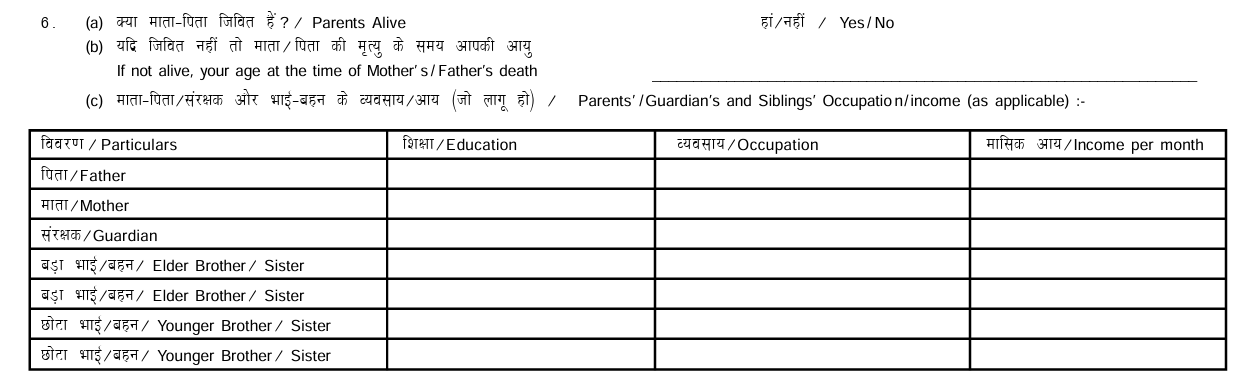
This covers your family members' education, occupation and income. The boxes are small, so write neatly and keep everything inside them. A cluttered form is the first thing the interviewing officer sees about you, and it doesn't help.
Section 7: education and achievements
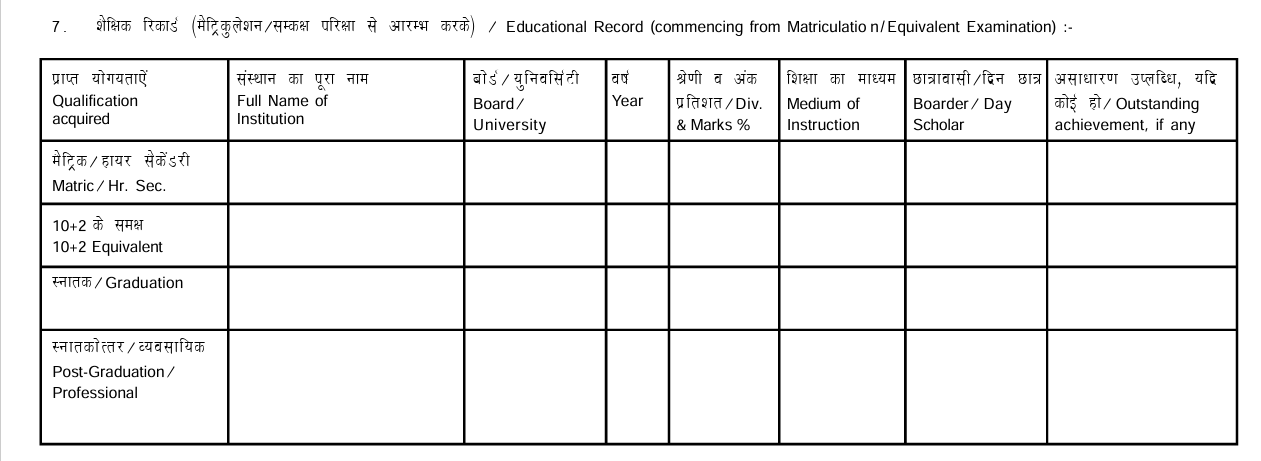
This has four rows: Class 10, Class 12, graduation and postgraduation. Next to each, you mention your achievements from that stage.
Leave out ordinary things. 'Took part in a school debate in Class 10' adds nothing. Write real achievements, in short phrases the officer can read at a glance. Nothing flashy, just solid and true.
On my form I wrote second place in an open district-level basketball tournament in Class 10, and first place at an inter-Kendriya Vidyalaya youth parliament in Class 12.
If you have no real achievement for a stage, leave it blank. That is completely fine and far better than filling it with something weak or exaggerated. If you have several, pick the best two at most and put the stronger one first.
Sections 8 and 9: physical details and family income
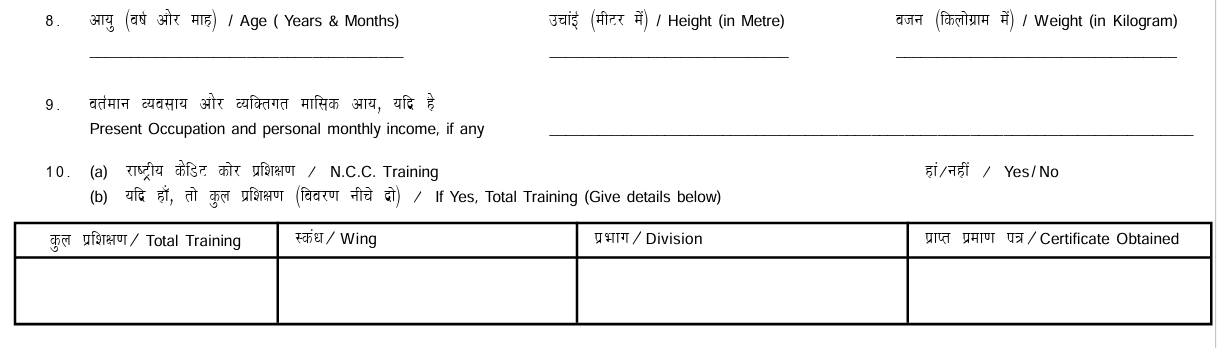
Section 8 asks your age, height and weight. People often worry whether being short or tall affects selection at the SSB. It doesn't, as long as you meet the medical standards. What counts is your character, your attitude and your fitness. Focus on what you can change.
Section 9 asks for family income and occupation.
Section 10: NCC
If you were in the NCC, fill in your details and which certificate you hold: A, B or C.
Section 11(a): sports and games
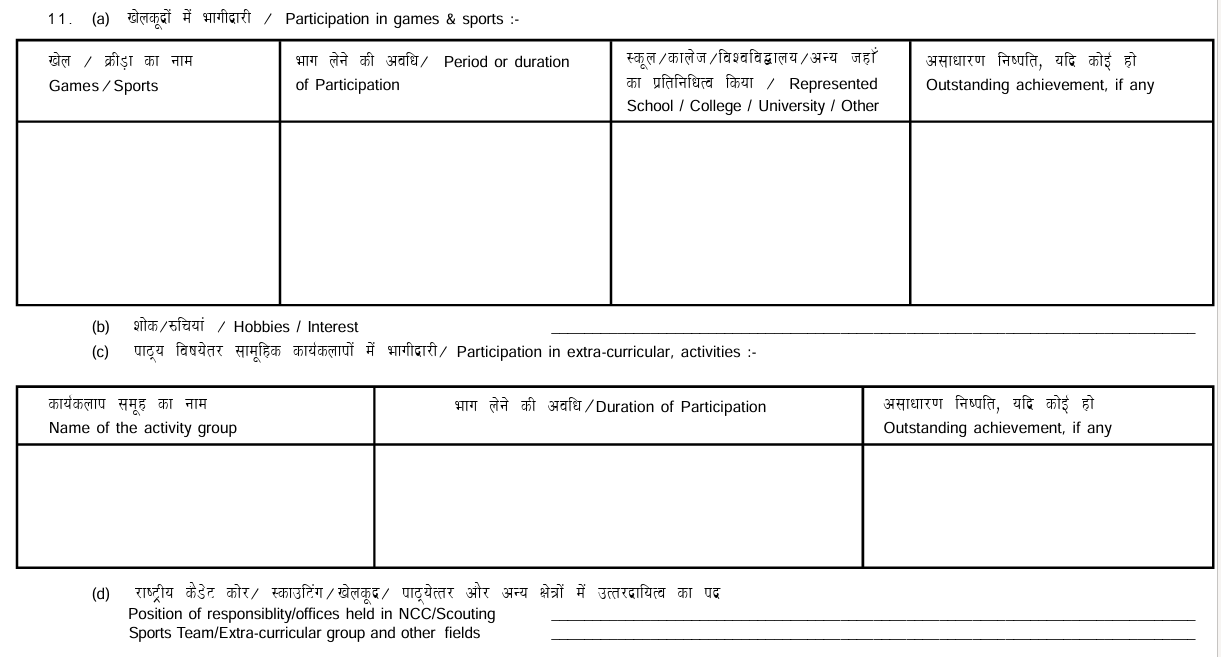
Section 11 matters most, because the interviewing officer builds many of his questions on it. From this section he gets an idea of how active you are, how you work in a team and how competitive you are.
If you play sports, list the things you have actually done. I wrote the basketball tournament, district-level volleyball, relay races, first place in an inter-unit 5 km run, and my chess, with an official rating of 1400.
Don't fake anything here, or anywhere else on the form. If you list a sport, expect detailed questions about its rules, the size of the field or your timings.
If you are asked something you don't know, like the exact size of a court, just say you don't know. Nobody expects you to know everything. They do expect you to be honest.
Section 11(b): hobbies and interests
Write things you do regularly and actually enjoy. Skip vague ones like casual gaming or gully cricket.
I wrote swimming, since I know all four strokes and have jumped from a 10 m board, and programming and web development, because I had built working web apps. If you write reading or gardening, know it properly: recent authors you've read, or what you grow and how. The officer will dig into it.
Section 11(c) and positions of responsibility
Section 11(c) is for extra-curricular achievements. If you don't have much sport, this is where debates, Olympiads, Model UN or youth parliament can go.
Again, write achievements, not participation, and don't use this space for exam ranks like your JEE score. Under positions of responsibility, list roles like school prefect, head boy or sports captain, and be ready to talk about what you actually did in that role and what you learnt.
Sections 12 to 14: previous attempts
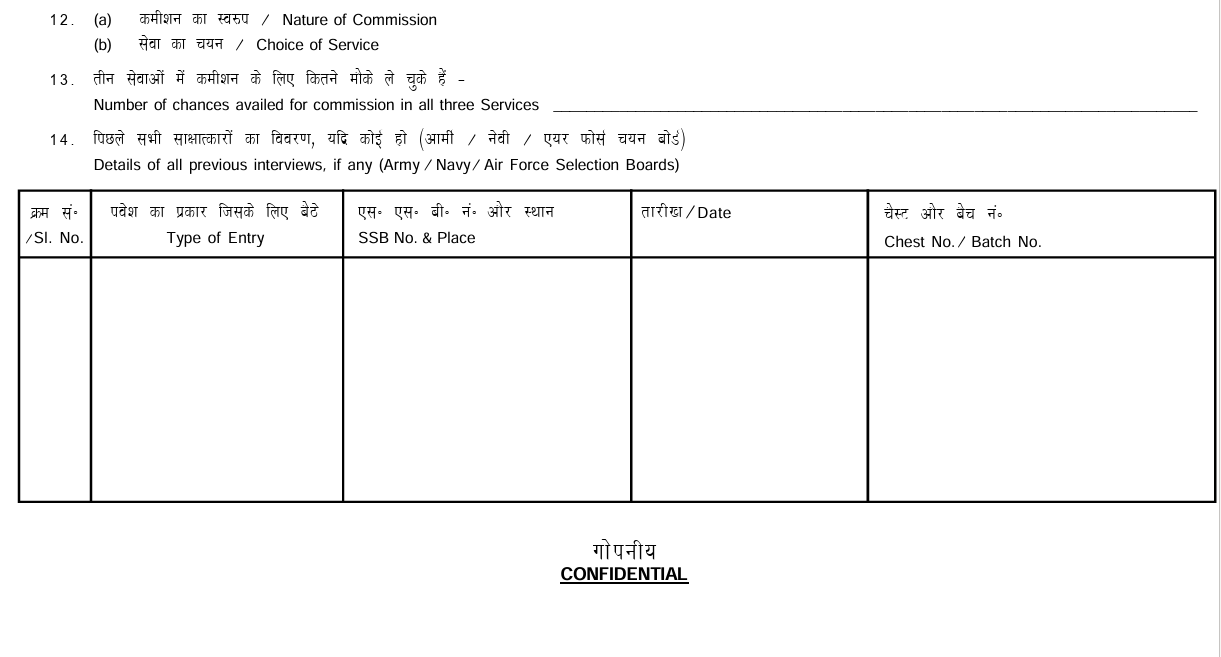
Section 12 repeats some basic details from your application. Section 13 asks how many times you have applied for the services, and section 14 asks about your previous SSBs.
If you are a repeater, be ready to talk about your earlier SSBs: what happened, what you think went wrong and what you have done about it since.